


Knowledge Base
The Truth About Oils: Which Ones Actually Benefit Your Horse?
Oils are a powerful way to support your horse’s condition - but not all oils are equal. Discover how they differ, and which type you should be feeding.
Read More

Gut Feelings: The Science Behind Pre and Probiotics
More and more people are choosing to feed their horses hindgut support supplements, but how do they work, and what benefit do they provide? Discover the science behind pre and probiotics, and why you should be feeding them.
Read More

No hoof, no horse – why you should look for hoof supplements that contain D-Biotin
If you have ever shopped for a hoof supplement before, then you are likely familiar with the ingredient, Biotin. This ingredient has by far the most scientific evidence to support its effect on hoof growth and quality. But, did you know that there is a superior form of Biotin, that can be even more beneficial?
Read More

New research emerges supporting the use of track systems for weight management
New research conducted by Hartpury University in collaboration with HorseWorld has emerged, which supports the use of track systems in weight management.
Read More
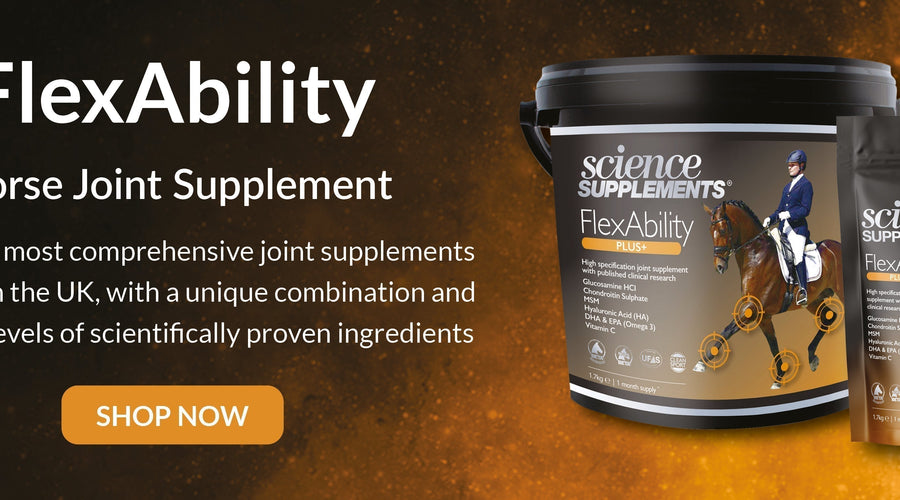
Product Spotlight - The FlexAbility Range
The FlexAbility Range - which one should you choose? Connie and Anna discuss the key differences between FlexAbility Plus and FlexAbility Professional, and what makes them so special.
Read More

Magnesium: The Biggest Myth on the Market
We often get asked why our calmers don’t contain magnesium, and the answer is simple. Scientific evidence for its use as a calming ingredient is incredibly limited, and most studies that have investigated this have come up with inconclusive results.
Read our latest blog to find out what the research does say, and why magnesium is the biggest myth on the market...
Read More

The 7 biggest mistakes we make when feeding balancers
Just like us, our horses need to get their daily dose of vitamins and minerals. We are all familiar with the idea of feeding a balancer, but ensuring that you choose the most appropriate one for your horse is important.
Read More

The Importance of Electrolytes
We often talk about the importance of electrolytes, and about how you should supplement your horse with them after intense work, or in warm conditions. But what actually are they, and what role do they play within the body?
Read More

Managing Respiratory Health in Summer
When we think of equine respiratory issues, we normally think about dusty stables during winter, when our horses inevitably have to spend more time indoors than we would want. But what about during summer? Read on to find out how summer can affect respiratory health, and what you can do to help your horse.
Read More

Don’t Sweat It! The Benefits of Micro Encapsulation Technology™ in Electrolytes
Electrolytes are essential minerals found in the body, needed for hydration, blood acidity regulation, nutrient absorption, and nerve and muscle function. If you have ever looked at our Complete Electrolytes or SafeSalt, you might have read something about Micro Encapsulation Technology. But what is this and why is it important?
Read More

Blowing Hot & Cold: Equine Thermoregulation
Blowing hot and cold: what does the changing temperature mean for our horses?
Horses have an amazing ability to thermoregulate – when we feel cold, they probably don’t. Read on to find out how the horse’s endothermic processes keep them comfortable.
Read More

Ascorbyl Monophosphate: A Stable Form of Vitamin C
Did you know that there is more than one form of vitamin C? You may be wondering: if this is the case, which one is best for my horse?
Read More